© 2025 Susy Travel all rights reserved

An exclusive weekend among the beautiful landscapes of the Langhe vineyards but with a “pop” atmosphere.
Visit a winery in pure “pop art” style, taste excellent Barolo in the evocative setting of the Langhe, and discover the unusual things hidden in these hills.
The first stop of our “POP” weekend will be Coazzolo: a small town nestled among the hills and vineyards of the Langhe
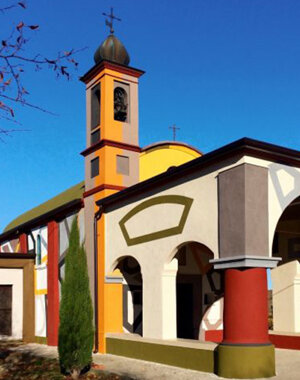
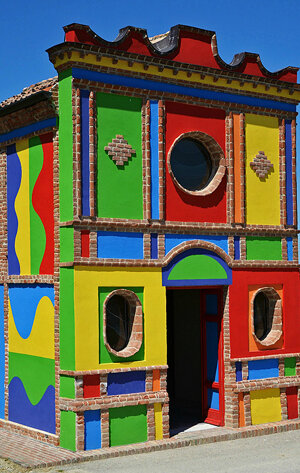
Here you can admire some “pop” installations including the giant bench, the little church of the Blessed Virgin Mary of Mount Carmel repainted by British artist David Tremlett using the Wall Drawing technique.
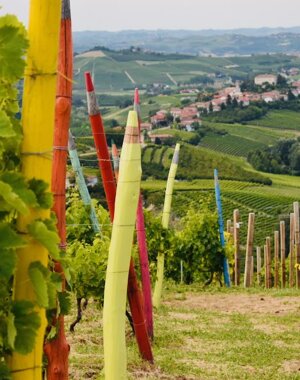
And, starting right from this colorful church nestled among the surrounding vineyards, you will be invited to continue the journey to discover another little curiosity of the area: the Vigna dei Pastelli of Coazzolo. In front of the church, in fact, a small sign invites you to continue for another 150 meters, heading higher up the hill to admire the colorful vineyard and the magical landscape from this panoramic viewpoint.
In this vineyard, owned by Azienda Agricola Anfosso Piercarlo, you can freely enter to admire a curious art installation: giant crayons that have replaced the wooden posts at the ends of the vine rows. A striking view from the top of the hill that stretches from the characteristic Langhe vineyards to Monviso, interspersed with these colorful giant pencils that offer an unusual glimpse for these places.
It's time for a short break, let's stop for an aperitif in Neive: one of the most beautiful villages in Italy. Located in the western part of the Langhe that stretches between Barbaresco and Castiglione delle Lanze, Neive is a small medieval village of stone houses with ancient charm and rich in atmosphere. The entire historic center, perched on the hill, has maintained its ancient medieval layout with characteristic stone streets and beautiful brick buildings. Framing this timeless scene is the lush surrounding nature made up of hills and vineyards in which the village is immersed and which can be admired from its many panoramic viewpoints. Splendid vineyards that produce equally splendid local wines: Barbera and Dolcetto d’Alba, Barbaresco and Moscato d’Asti. Staying on the food and wine theme, in the center of Neive there is also the Museo Casa della Donna Selvatica (free entry), dedicated to the production of “Grappa della Donna Selvatica”, a very famous distillate worldwide. Each bottle is adorned with hand-drawn labels and a composition of herbs immersed in the same bottles. An authentic production that reflects the hidden poetry within Neive, a village with strong roots in its past where you can rediscover a passion for history and immerse yourself in the calm of its stone streets.
Last stop of the day: Grinzane Cavour with its Castle and Wine Shop
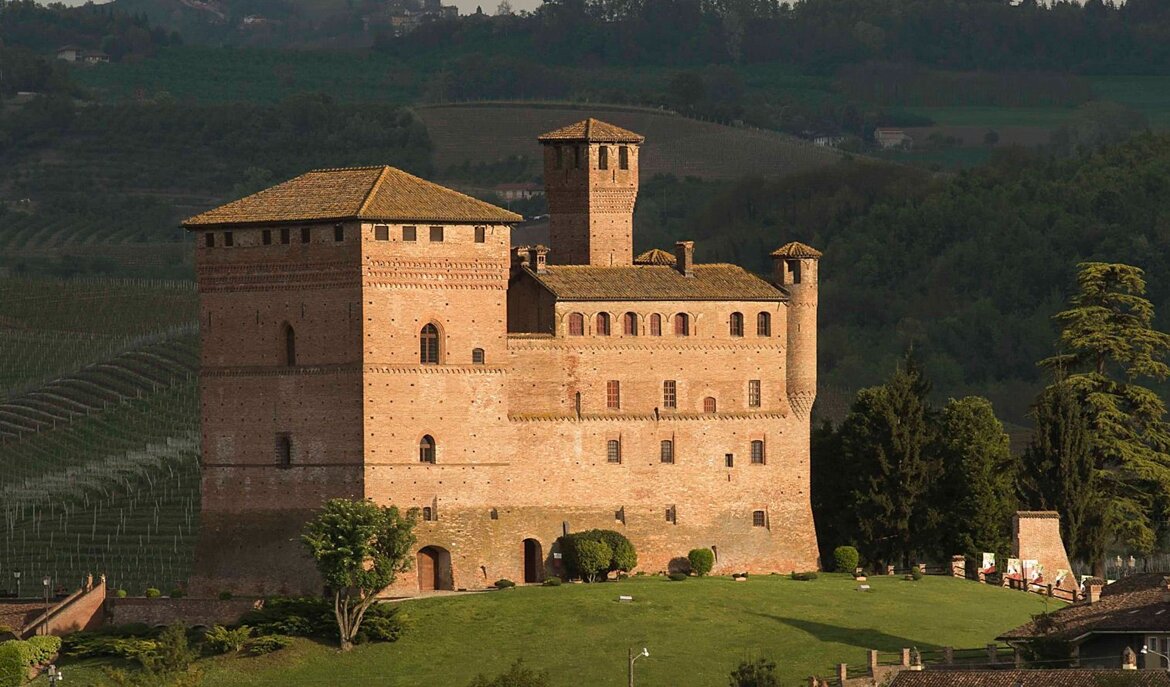
The Castle of Grinzane Cavour stands in one of the most picturesque landscapes of the Langa, 5 km from Alba. The imposing structure, built around the central tower from the first half of the 11th century, can be admired in all its beauty thanks to the restorations begun in 1960, on the occasion of the first centenary of the Unification of Italy. In June 2014, the Castle received the prestigious recognition of UNESCO World Heritage Site, together with the "Vineyard Landscapes of Piedmont: Langhe, Roero and Monferrato".
Inside the Castle is the Enoteca Regionale Piemontese Cavour, established in 1967, the first of its kind in the Region.
A prestigious showcase of the best Piedmontese wines and grappas, strictly selected; first and foremost, Barolo and Barbaresco.
The wines on display are for sale, paired with the most significant typical products of the area.
After an excellent breakfast, departure with destination La Morra.
Here you can admire one of the pop jewels of the Langhe: the Barolo or Brunate Chapel. A truly bizarre building, towering among the splendid and gentle countryside of the Langhe. It was built in 1914 as a shelter from the weather for those working in the vineyards, and it was never consecrated. For many years it remained unused, left at the mercy of time passing inexorably, contributing to its slow ruin. But in 1972, the Ceretto family decided to give it a new chance: purchased along with a vast plot of vineyards, the small chapel was little more than a ruin. In just a few years, the transformation was incredible. In 1999, the task of restoring it was entrusted to two artists, David Tremlett and Sol LeWitt, who, between a glass of good wine and a glance at the breathtaking Langhe landscape, had a true stroke of genius. The men divided the work equally, so that Tremlett took care of the interior decorations and LeWitt of the exterior appearance. The result is nothing short of incredible, and has made the Chapel of the Madonna delle Grazie the pride of La Morra and the entire region. The church has become the most modern symbol of these fascinating sun-kissed lands, thanks to the thousand vibrant colors that characterize its facade and the welcoming details that can be admired inside.
It’s finally time to meet the King of the Langhe: the legendary Barolo!
Once again in a POP key: the leitmotif of your weekend!
The name of the winery already says it all: l’Astemia Pentita…
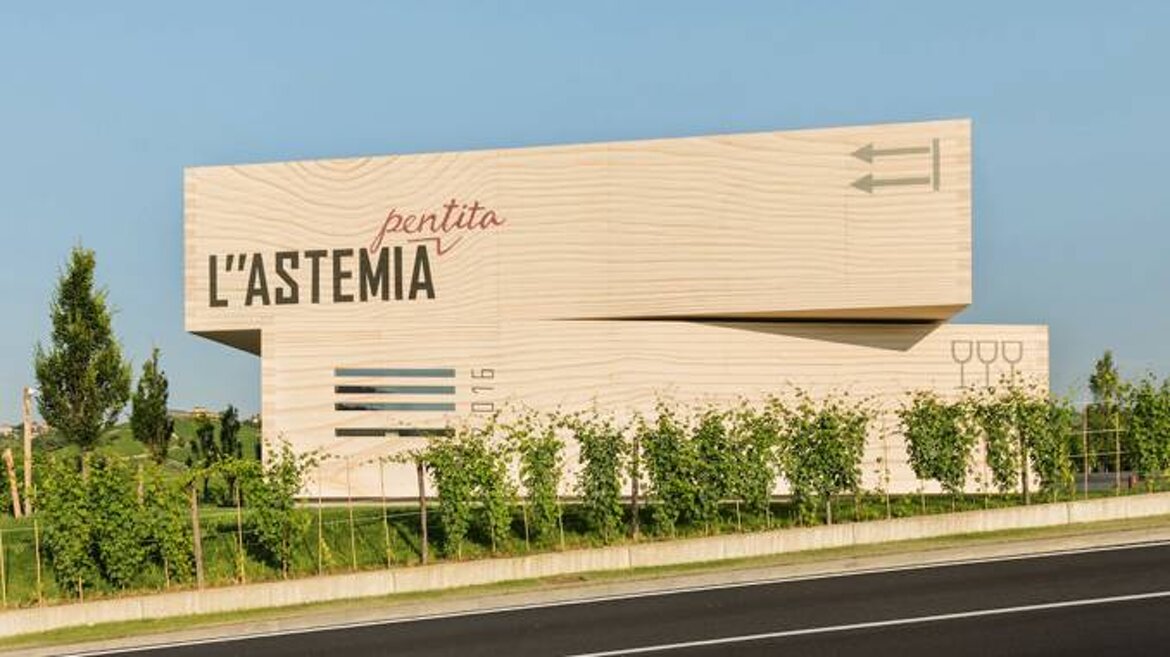
In the Barolo area, on the Cannubi hill, where the ridge that hosts the most precious vineyards of the Langhe begins to rise towards the center of the village, stands L’Astemia Pentita, the first pop wine cellar desired by Sandra Vezza.
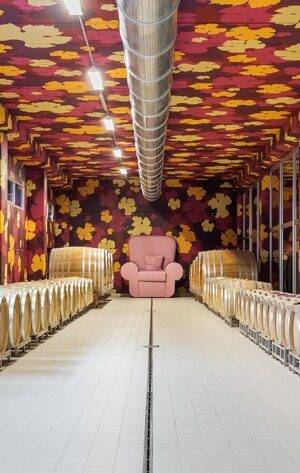
The name of the winery, in fact, already tells the story of the project: Sandra Vezza, always a teetotaler, with the decision to devote herself to wine production, definitively announces her repentance. An absolute love for the Langhe and for wine that, since she was a child, the entrepreneur developed thanks to her grandfather who, taking her by the hand, would take her to walk among the rows and to whom, today, she has managed to give continuity with a project of innovative and disruptive character, also thanks to a unique architecture. The architecture of the building is a declaration of love for pop aesthetics. Two large superimposed volumes resting on the gentle Cannubi hill evoke the shapes of two oversized wine crates. A completely underground production heart and no fencing to protect the winery, which is surrounded only by rows of vines, to respect the environment and emphasize the strong belonging to the landscape. For Sandra’s interior spaces, natural materials linked to wine production were favored, such as raffia, used to wrap bottles and protect them during transport. Tradition and boldness oppose and merge to create an architectural project unique in its kind. The flooring evokes nature and tradition, while the ceilings of the cellar feature large murals, created by local artists, with a pop and surrealist aesthetic, which create in the visitor the illusion of actually being inside a wine crate at the moment when a hand is extracting a bottle. For the winery’s furnishings, some of Gufram’s iconic products are a must, such as the Bocca sofa, the Cactus, but also more recent projects like the Roxanne armchair.
It’s time for the tasting…
Langhe DOC Nebbiolo, Barolo DOCG, Barolo Terlo DOCG, Barolo Cannubi DOCG will make your head spin!
It’s lunchtime! After the Barolo tasting, it’s a good idea to pair it with a delicious Barolo risotto that you can enjoy in the splendid setting of the village of Barolo itself. I recommend the Barolando restaurant, right in the historic center.
After lunch, take a tour of the small and delightful village of Barolo. You can visit the Wine Museum and the fascinating Corkscrew Museum.
© 2025 Susy Travel all rights reserved